
Car ownership guides to help you stay on top of the basics in the UK MOTs, servicing, road tax, insurance, maintenance, and running costs. These guides explain what to do, when to do it, and what to watch out for so you can keep your car reliable, safe, and cheaper to run over time.
Start here: the most useful car ownership guides
If you want quick wins, start with the guides below. They cover the common questions UK drivers have and the checks that can prevent expensive problems later.
- How to check your MOT history (and what advisories mean)
- When should you service your car? A simple UK schedule
- Car insurance basics: what affects your premium
- Road tax (VED) explained: how to check and pay
- Car maintenance checklist: weekly and monthly checks
- Warning lights explained: what to do next
Quick car ownership checklist (UK)
For most UK drivers, the biggest cost-savers are simple habits: keep tyres correctly inflated, stay on top of servicing, and fix small issues before they become bigger ones. A clean MOT story and consistent maintenance history can also protect your car’s resale value.
Once a month, check tyre tread and pressure, oil level (if your car allows a dipstick check), washer fluid, and that all exterior lights work. If you notice new noises, warning lights, or changes in braking/steering feel, get it checked sooner rather than later.
Latest car ownership guides
-
Documents Needed to Sell a Car in the UK (V5C, MOT, Service History + More)
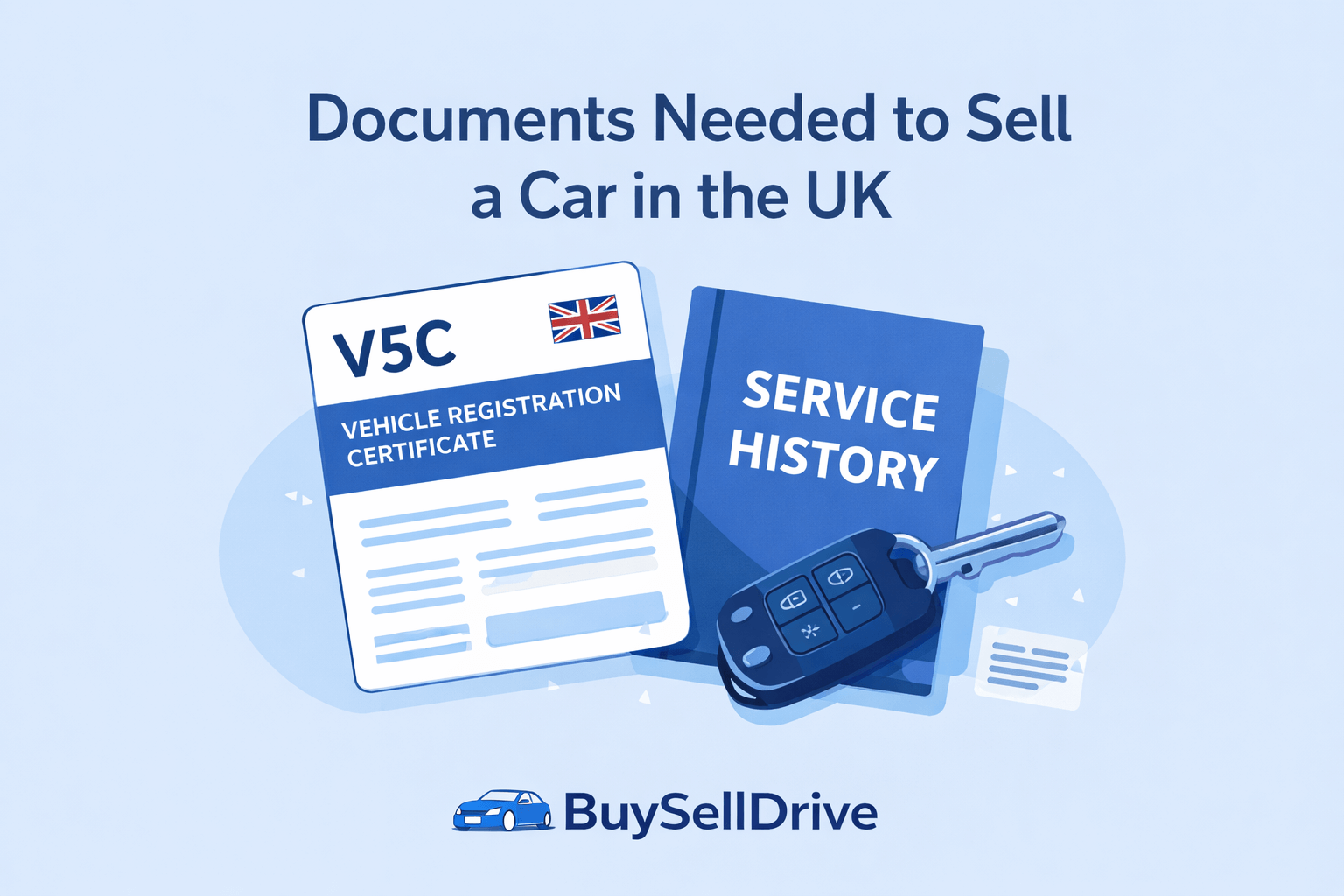
Selling a car in the UK is usually simple, but missing paperwork can slow everything down especially if you’re trying to agree a price quickly or arrange a collection. This guide explains the documents you need to sell a car, what each one is for, and what to do if you don’t have something to
Car ownership FAQs
A common rule is once a year or every 10,000–12,000 miles, but always follow your car’s service schedule. If you do lots of short trips, servicing on time can matter even more.
An MOT is a roadworthiness test required by law once your car is old enough. A service is routine maintenance (oil, filters, inspections) that helps keep the car running properly.
You can check MOT history using the registration number to see past pass/fail results and advisories. It’s useful for spotting repeated issues like tyres, brakes, or suspension wear.
The legal minimum tread depth is 1.6mm across the central part of the tyre, but replacing earlier is often safer especially in wet weather.
Keeping service invoices and receipts helps prove maintenance, supports resale value, and can make it easier to diagnose issues later.
Thinking of changing your car soon?
If you’re planning to sell your current car and move to something else, start with a quick valuation. We’ll come back to you with a fair offer based on your car’s details and condition.
Explore other BuySellDrive guides
Looking for something else? Browse our other guide hubs below.