
Car buying guides to help you choose your next car with confidence. We cover what to check before viewing, questions to ask a seller, test drive tips, paperwork, and common red flags. These guides are written for UK buyers and focus on practical, real-world steps you can use immediately.
Start here: the most useful car buying guides
If you’re buying soon, start with these. They cover the checks that matter most and the mistakes that cost people money.
- What to look for when buying a used car
- Used car paperwork checklist (V5C, MOT, service history)
- How to test drive a used car properly
- Dealer vs private sale: what’s safer in the UK?
- Common used car buying mistakes (and how to avoid them)
- Best used cars under £5,000 in the UK (reliable picks)
A Quick used car buying checklist (UK) 2026:
Before you travel to view a car, check the MOT history, confirm the V5C details match the seller, and ask for service history evidence. On the viewing, inspect tyres, brakes, warning lights, bodywork alignment, and signs of leaks or damp inside the cabin and boot.
On the test drive, listen for knocks over bumps, confirm the clutch bite point and gear changes feel clean, and make sure the car pulls straight under braking. If anything feels “off”, it’s usually cheaper to walk away than to fix problems later.
Latest car buying guides
Browse our newest posts below.
-
Best Cars Under £5,000 in the UK (2026): 11 Reliable Used Picks (and What to Check)
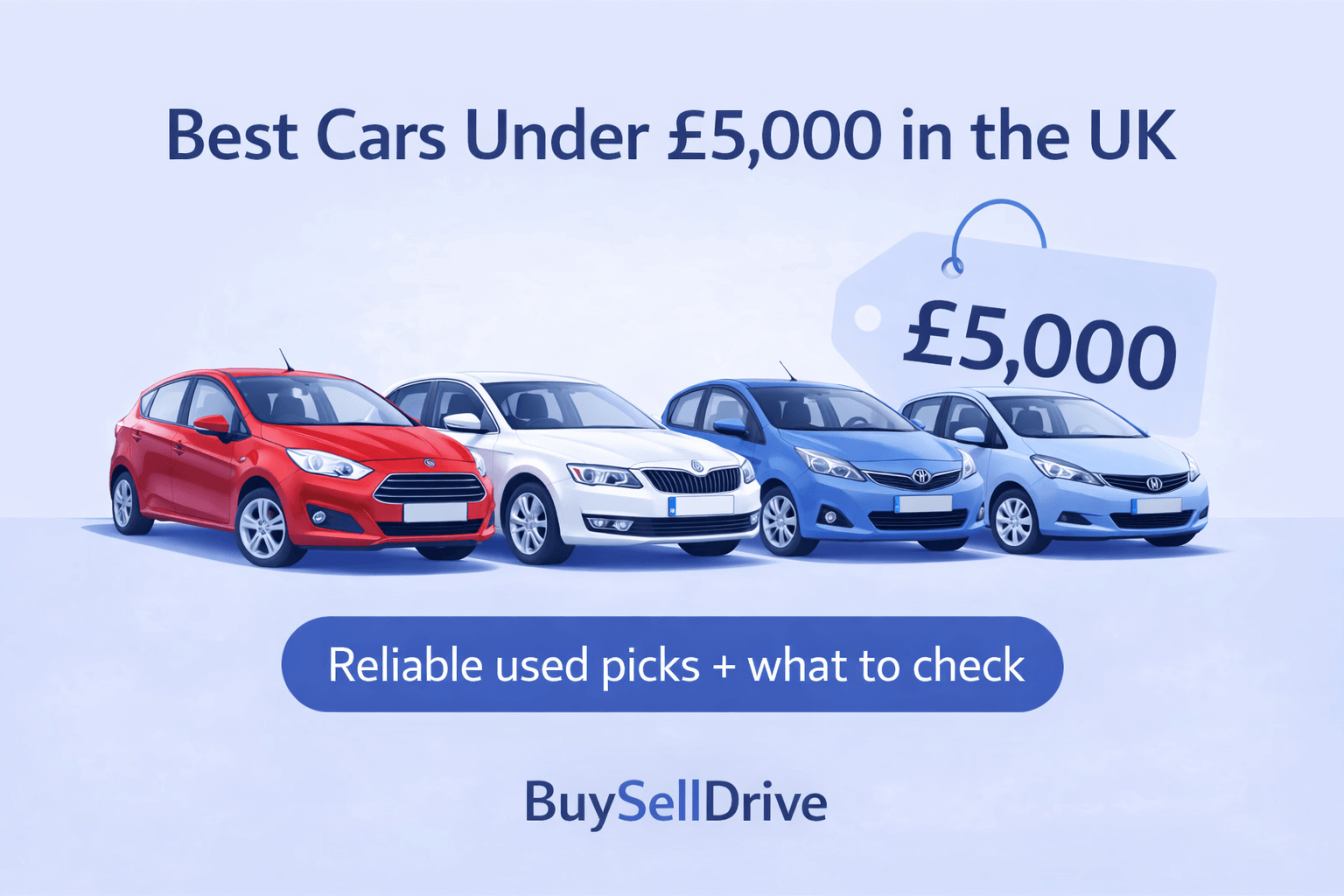
A £5,000 budget can still get you a dependable used car in the UK if you choose the right model and the right example. At this price, condition and history matter more than age. The goal isn’t to find the cheapest advert; it’s to find a well-maintained car with a clean MOT story, sensible running
-
What to Look for When Buying a Used Car in the UK
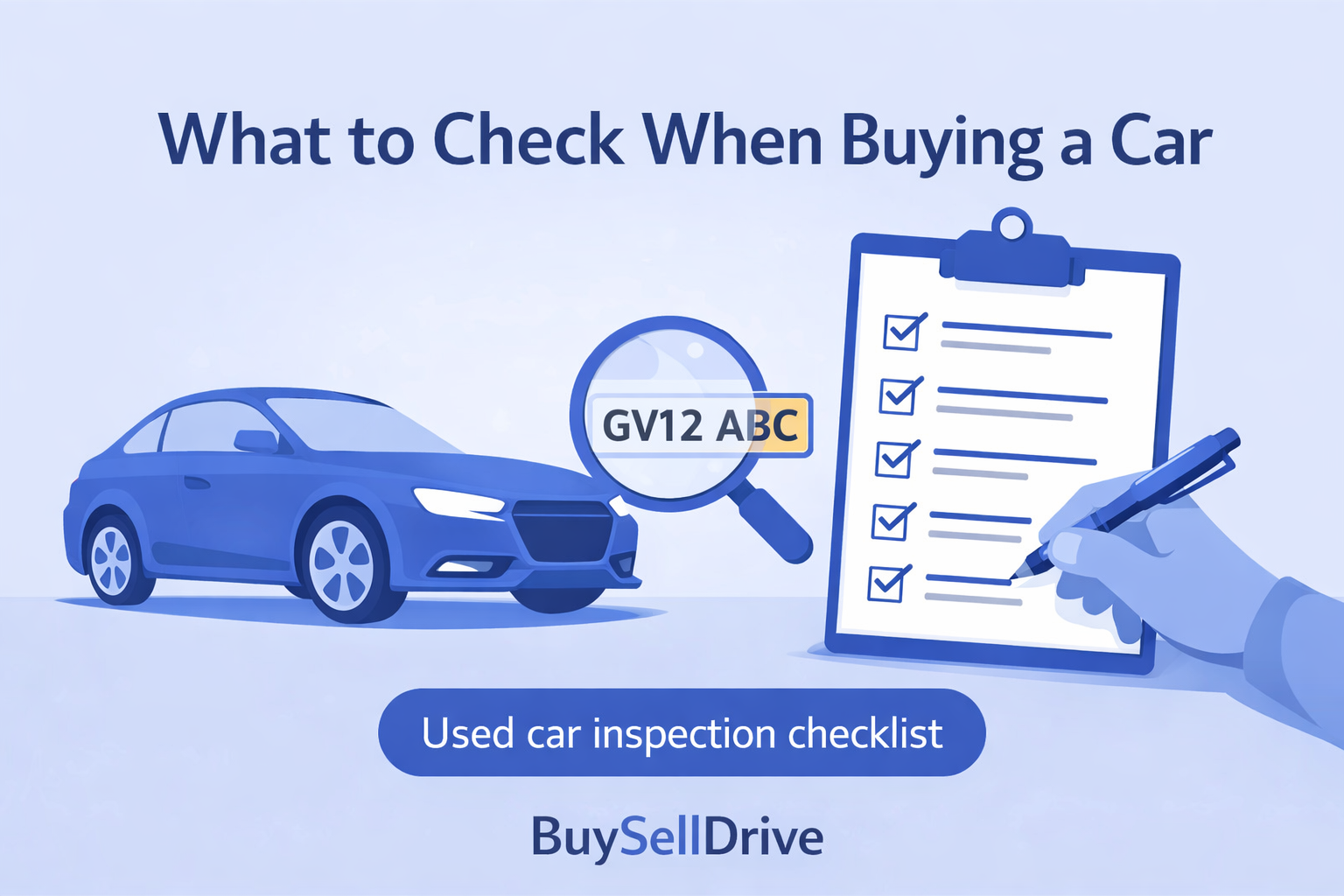
If you’re buying a used car in the UK, the goal is simple: avoid the expensive surprises that don’t show up in photos or a short description. This guide focuses only on the checks that matter when you view a car, inspect it in person, and drive it so you can decide confidently before you
Explore other BuySellDrive guides
Looking for something different? Browse our other guide hubs below.
- Car Selling Guides
- Car Value Guides
- Car Ownership Guides
- Vehicle Types
- Emissions & Clean Air Zone Guides
Car buying FAQs
Start with MOT history, the V5C/logbook details, and service history evidence. If those don’t add up, it’s usually not worth travelling to view the car.
Ideally the V5C, service history (stamps/invoices), MOT details, and any receipts for recent work. Two keys are also a strong sign the car has been looked after.
It can be, but private sales usually come with more risk and less consumer protection. The best route depends on your budget, risk tolerance, and how confident you feel inspecting a car.
Long enough to include speed changes, a few bumps, braking, and a short dual carriageway/motorway section if possible. Ten to twenty minutes is often a sensible minimum.
A seller rushing you, missing paperwork, warning lights, uneven tyres, strong smoke smells, fresh underseal hiding corrosion, or a story that doesn’t match the car’s condition and history.
Selling your current car before you buy?
If you’re planning to sell your current car before buying your next one, you can start with a quick valuation. We’ll come back to you with a fair offer based on your car’s details and condition.